gavin makes

Costumes, props and electronics

Tag: cosplay

  • Making the forge hammer for Leo Valdez

    Making the forge hammer for Leo Valdez

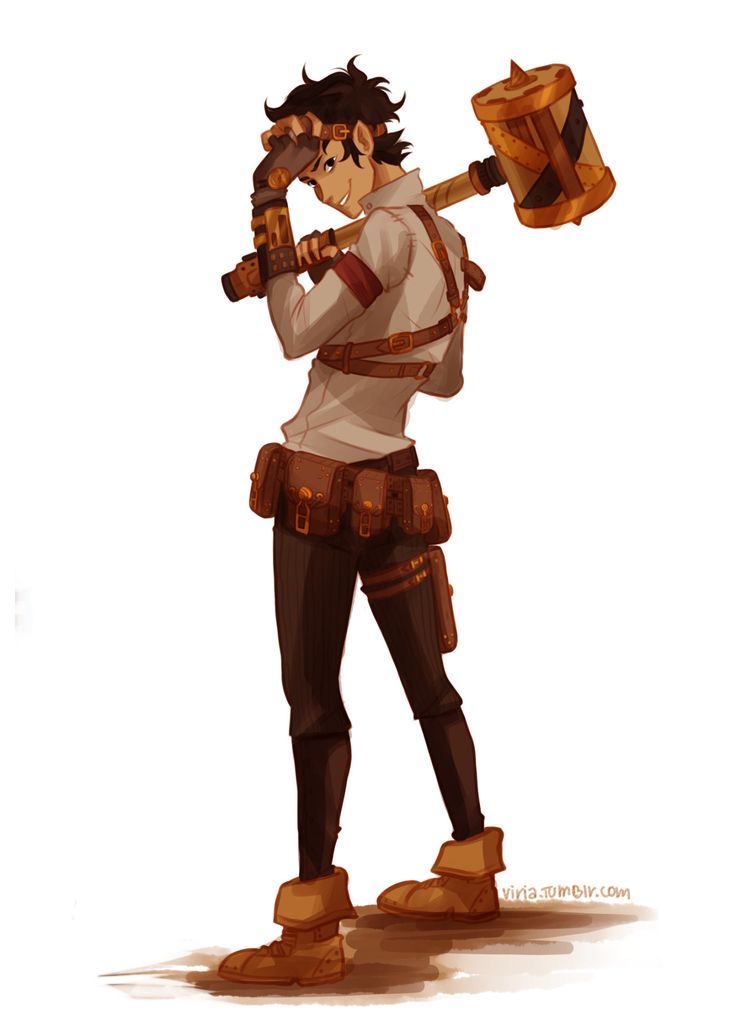
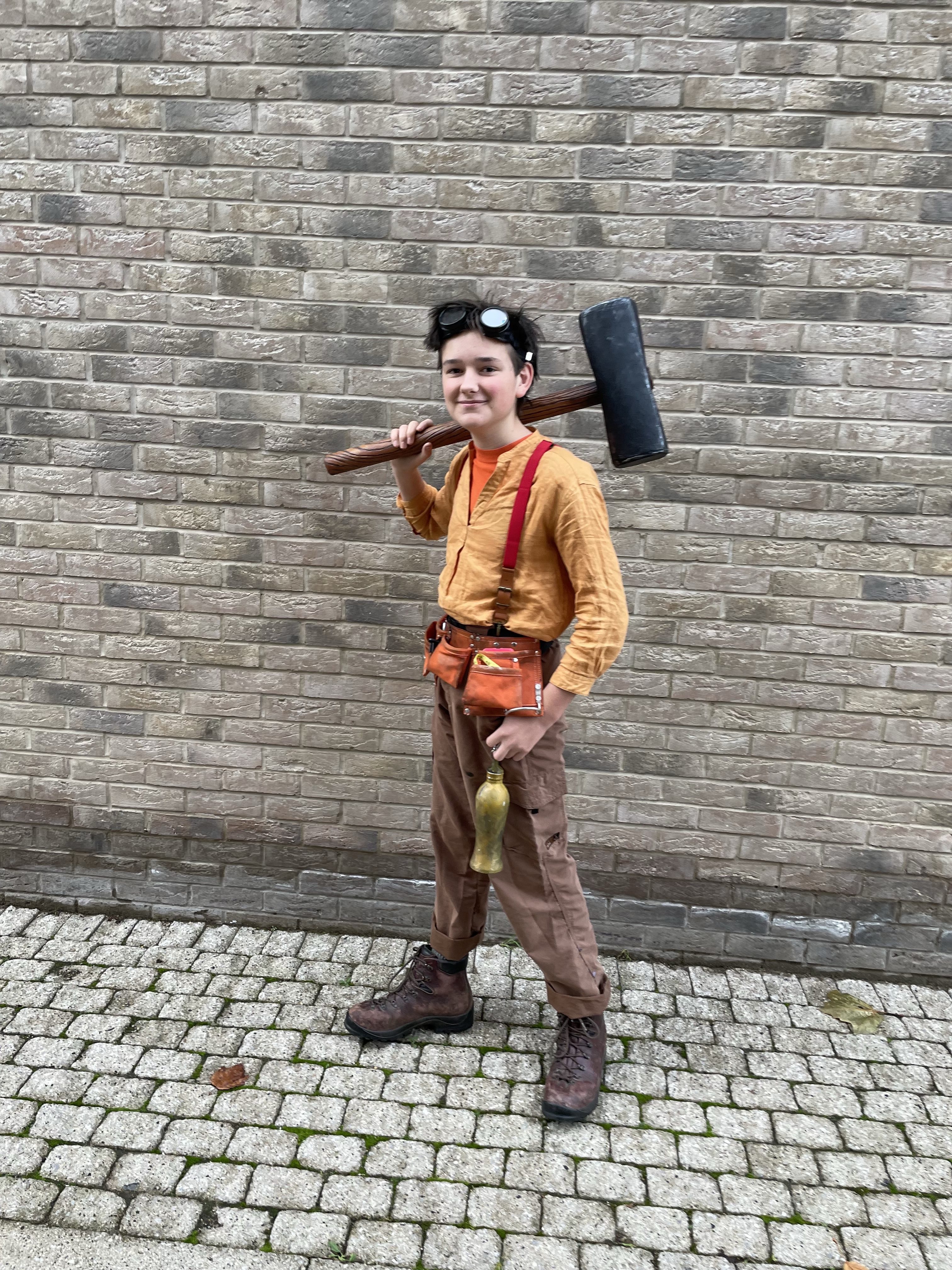
    Max read the Percy Jackson books and keen on the idea of being one of the characters for his first cosplay. Leo Valdez was the character Max wanted to be.

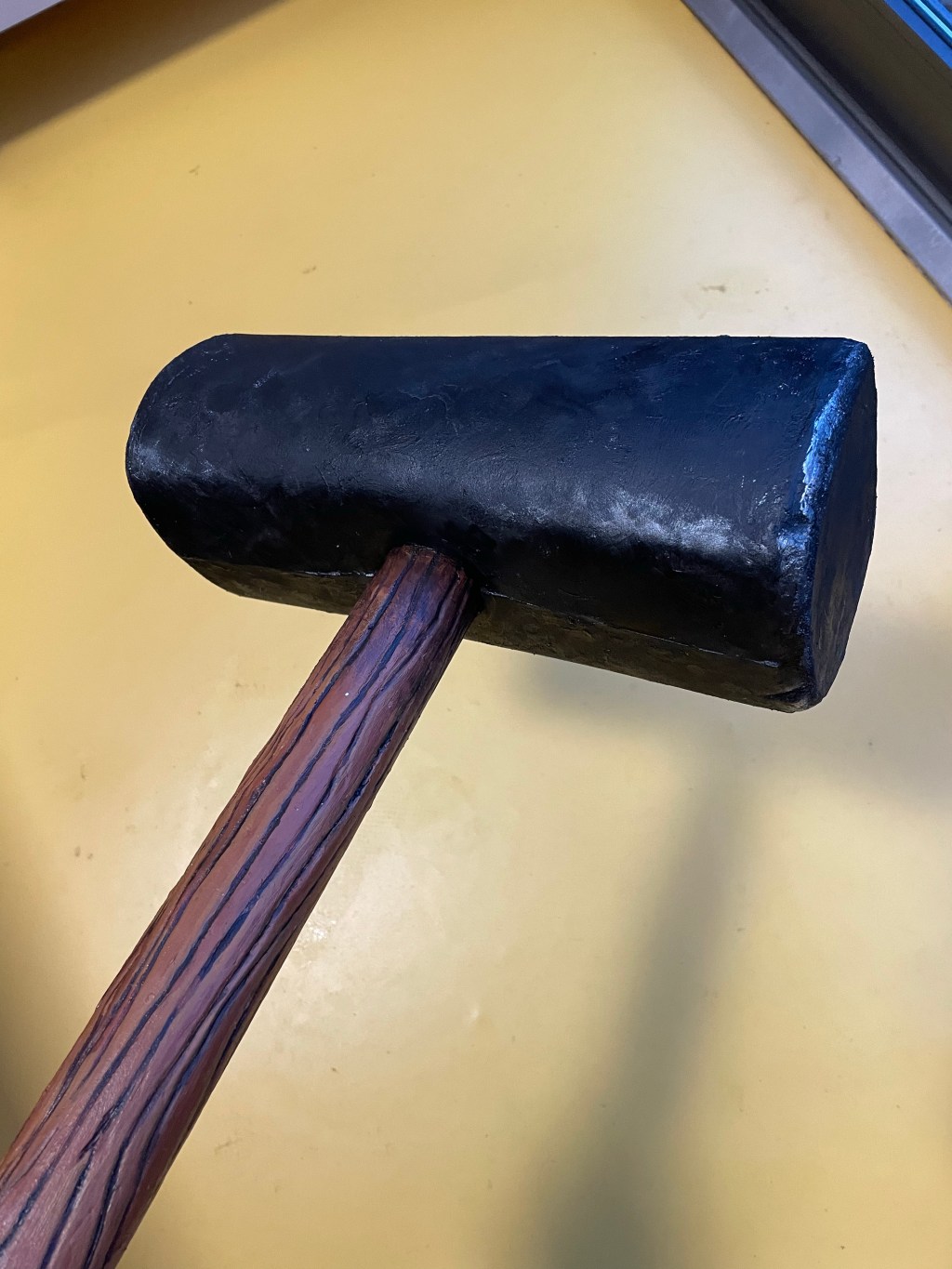
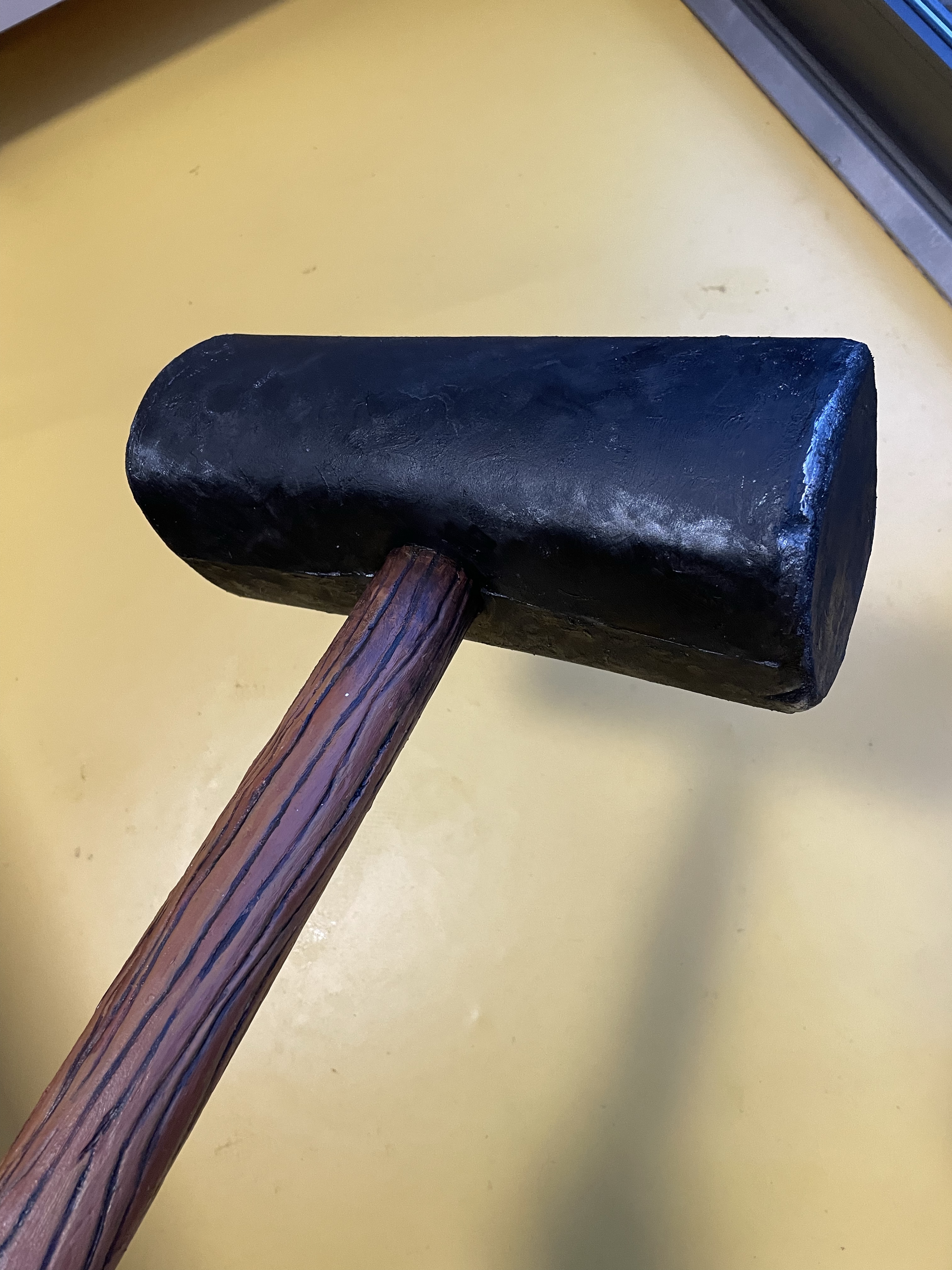
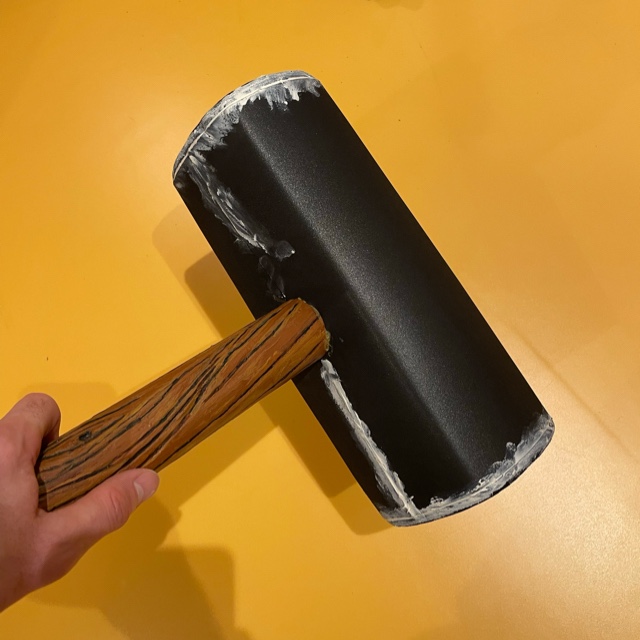
    The primary prop was a big forge hammer. We made it mainly from EVA foam and it was a fun build. Two things I will highlight is the wooden handle technique and how to create the squaricle hammer head shape.

    forge hammer

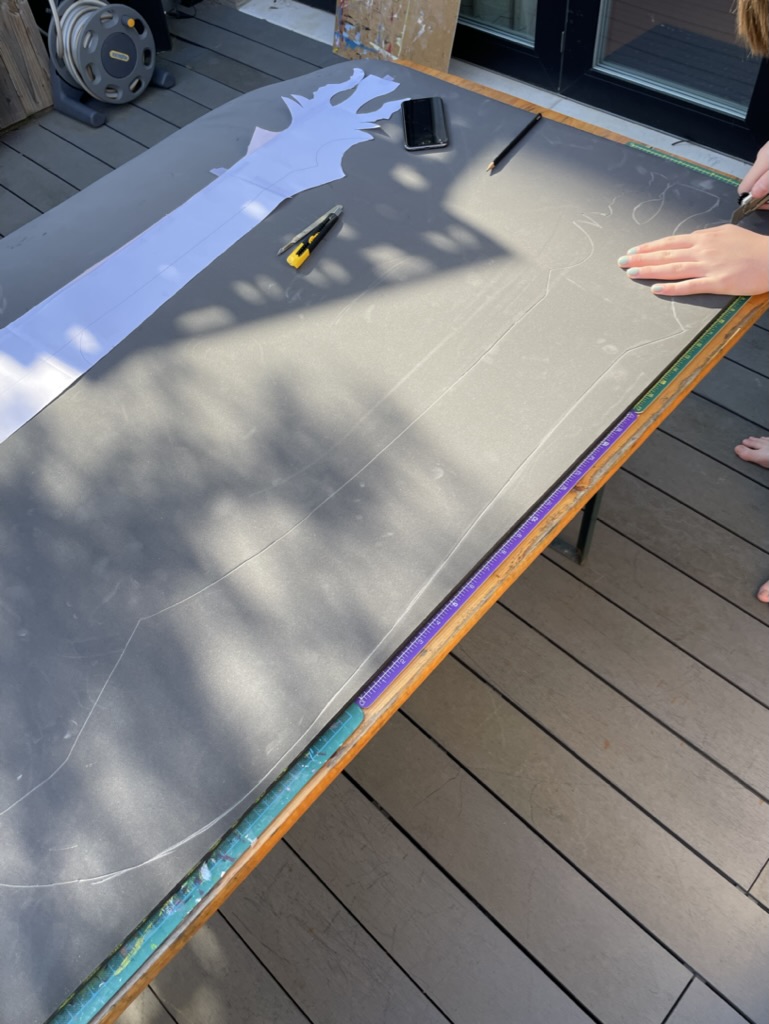
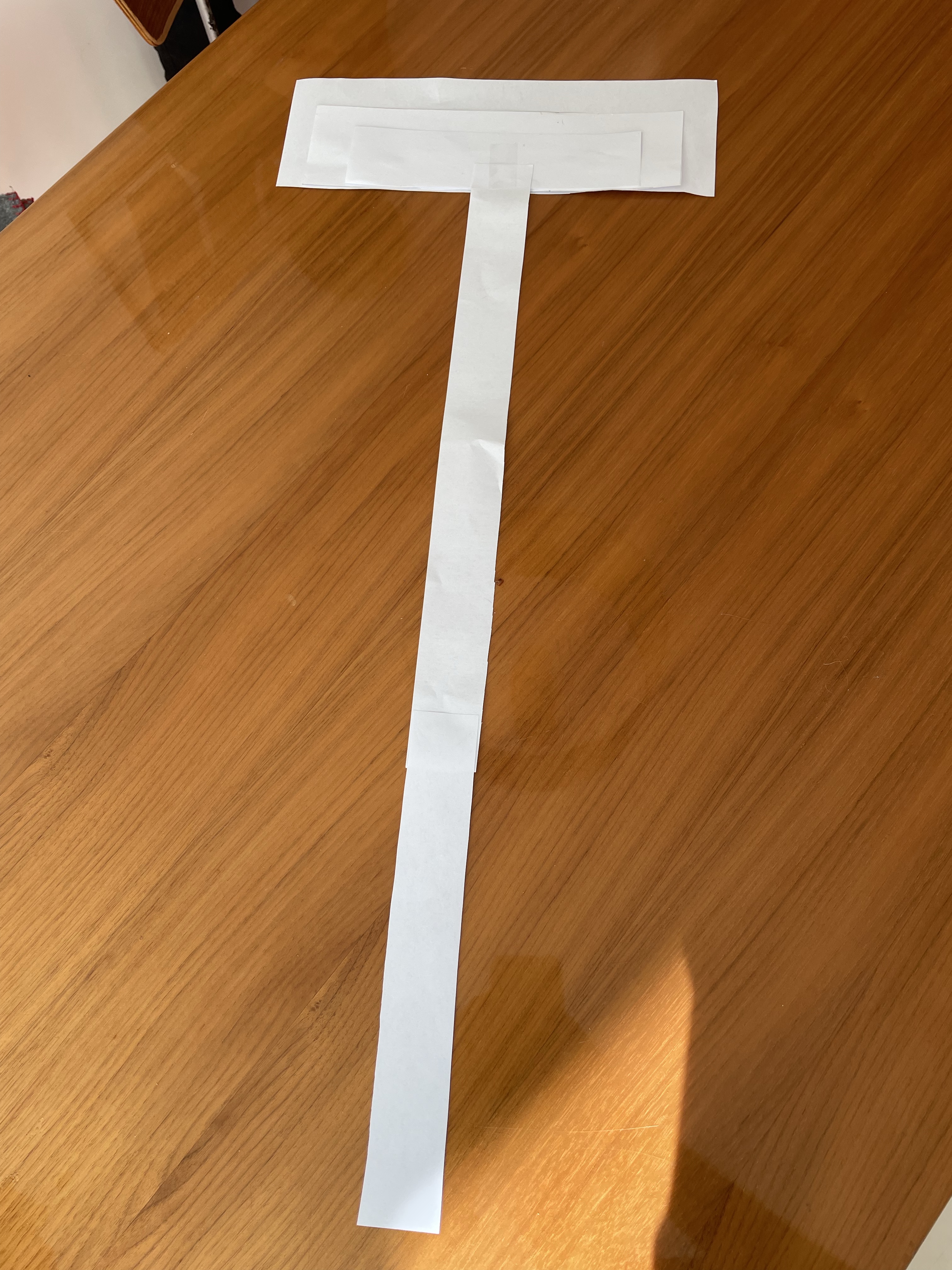
    Firstly to get the right sense of scale, we started with a regular sledgehammer from amazon, biggest one we could find, which was 16lbs, over 7kg. Then made a paper plan of that and gradually scaled it up to a suitably heroic scale. We got Max to hold it to check sizing and went for the largest of the three templates below.

    The hammer head ended up being larger than Max’s head, but it looked great and he got quite a few complements.

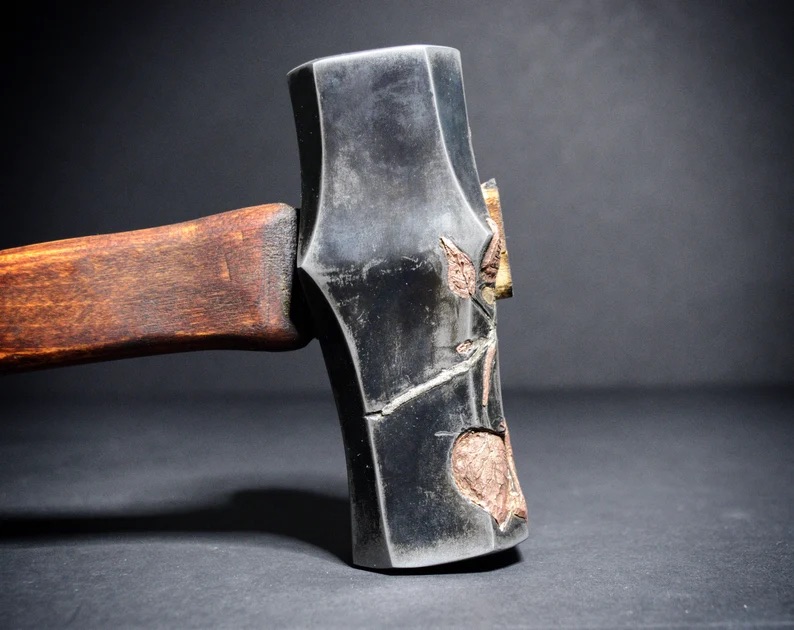
    To get the hammer head right shape we looked at blacksmiths forging hammers, like this one from etsy. A lot of templates for cosplay hammers use individual panels to create the hammer head, but using one piece of foam made the hammer feel more like a tool. No seams showing or joins in the foam.

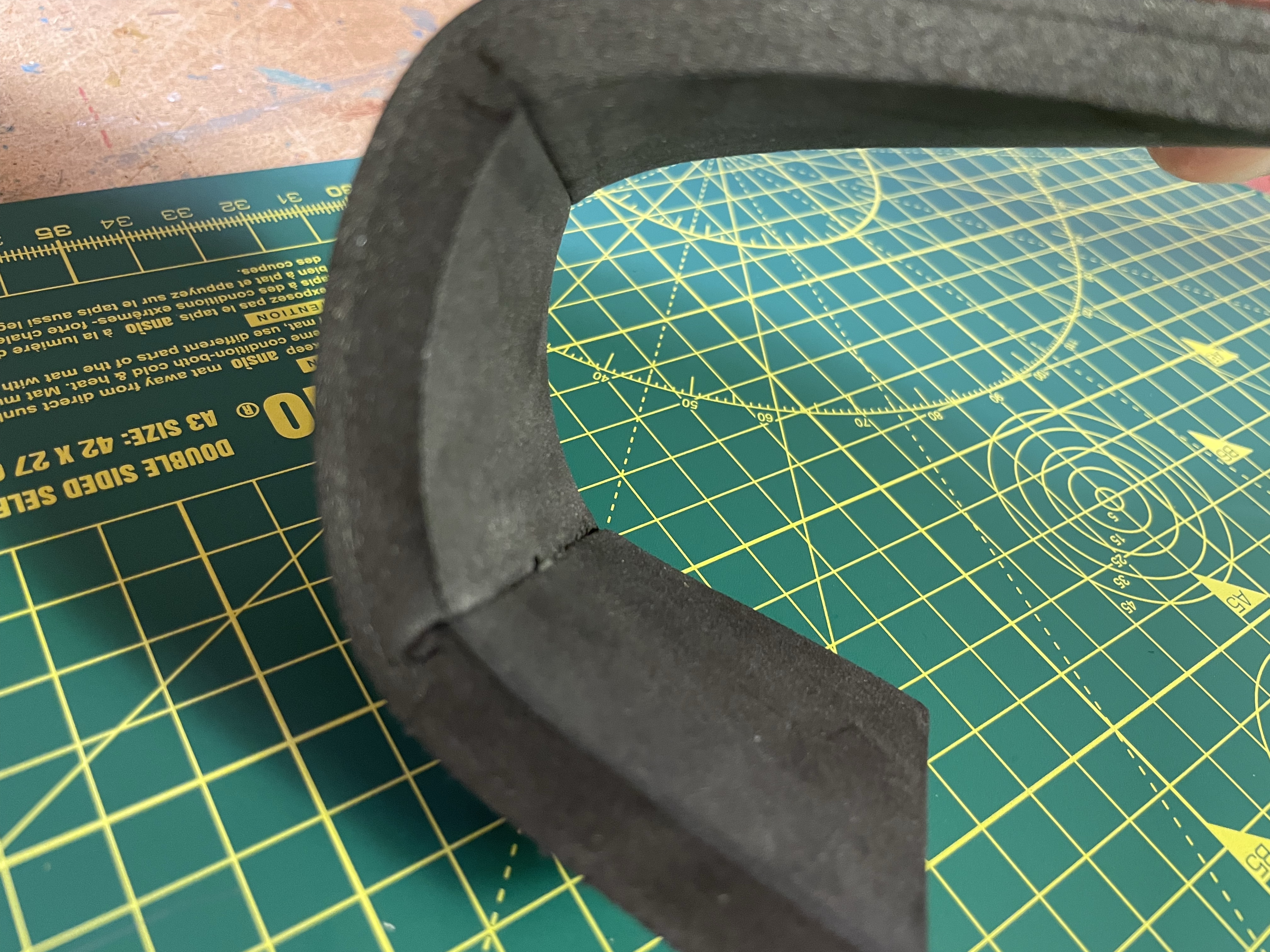
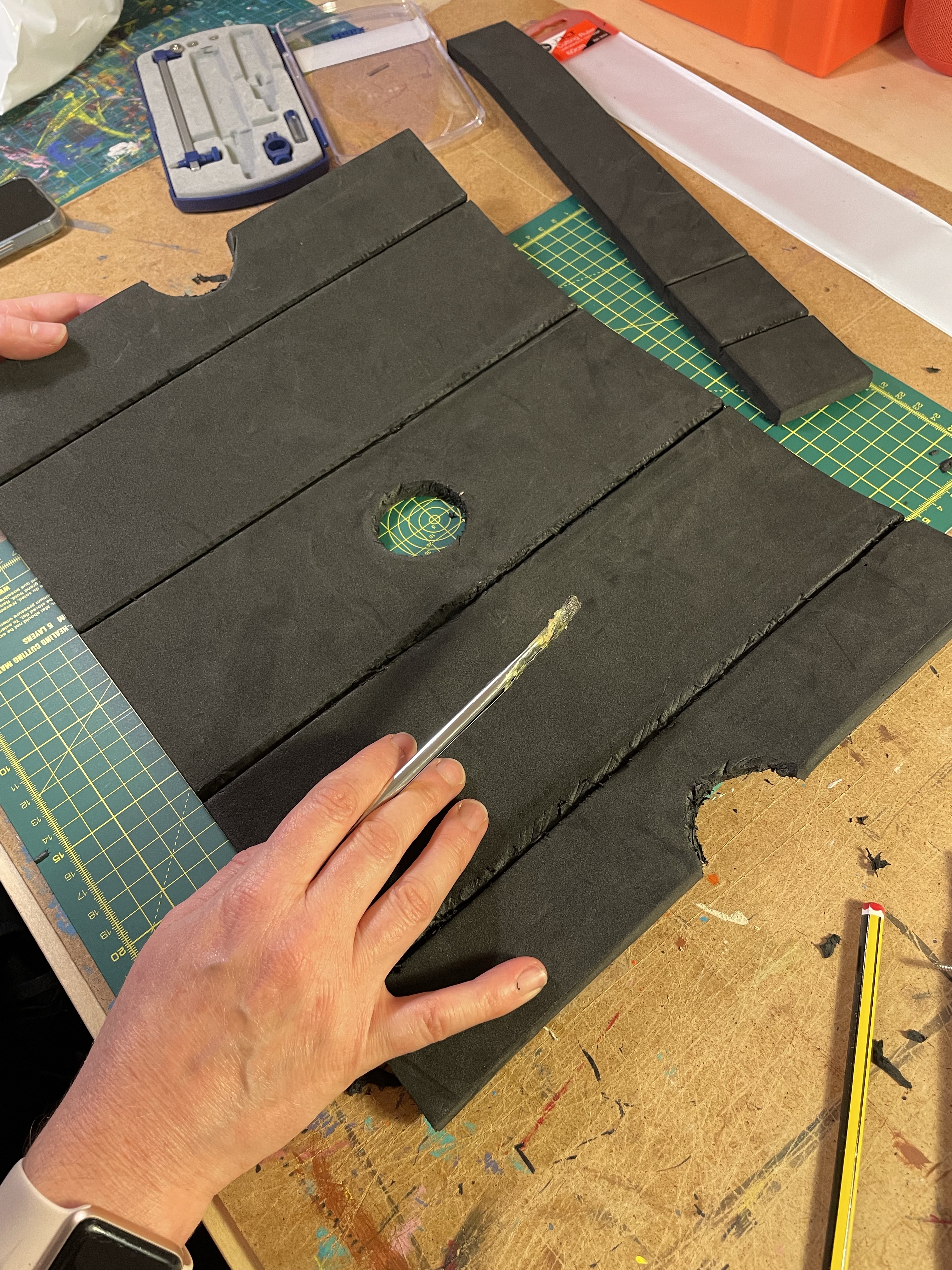
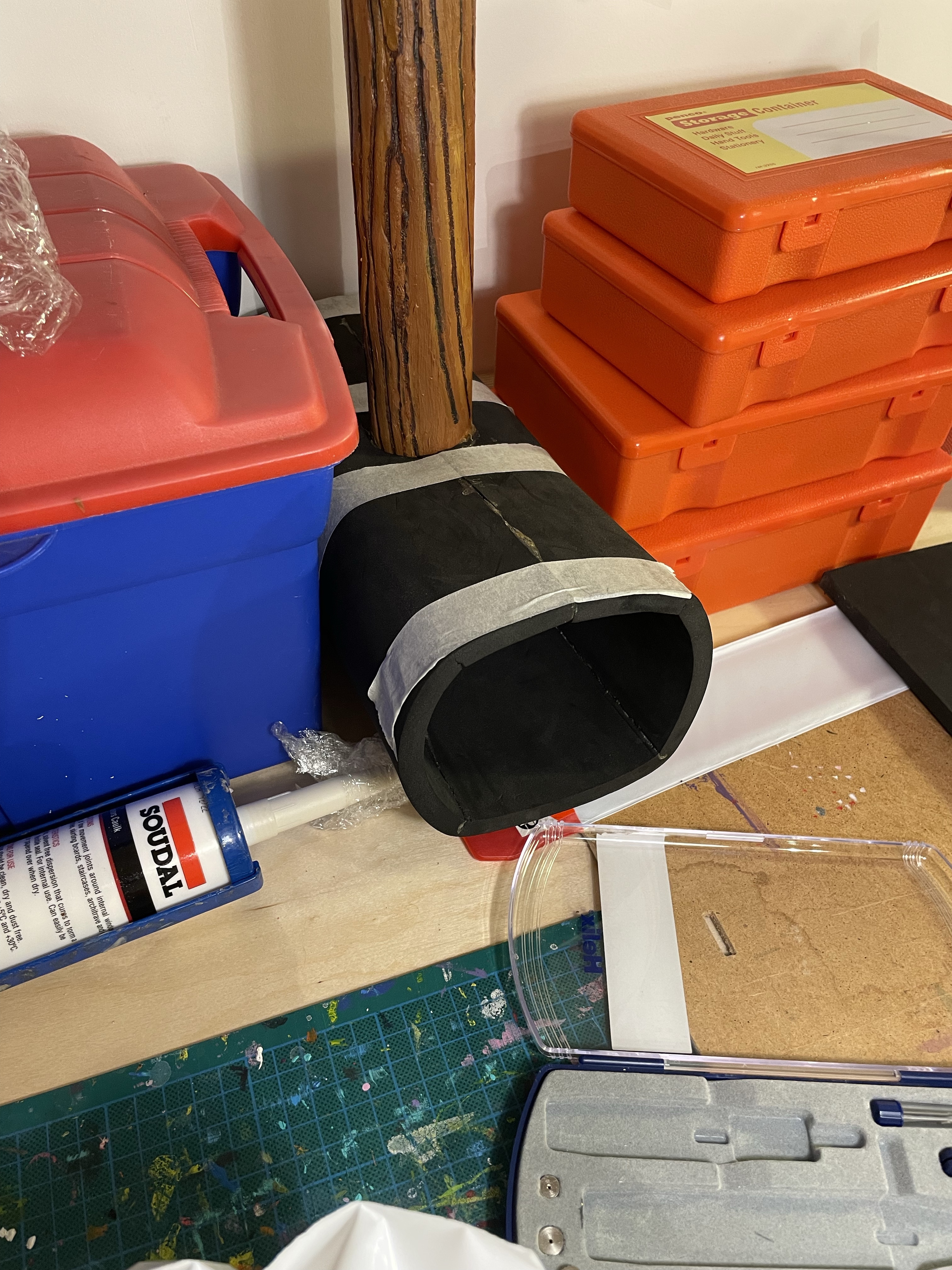
    The template meant each side was about 10cm in size, so we cut a single piece of 10mm eva foam and then cut a v-shaped section out of the foam to allow it to fold and have nearly 90 degree angles. You can see the test strip we did the initial prototyping on above the flattened out hammer head. Contact adhesive (I like Alpha Thixofix) helped the foam take its shape and then affixed it to the handle.

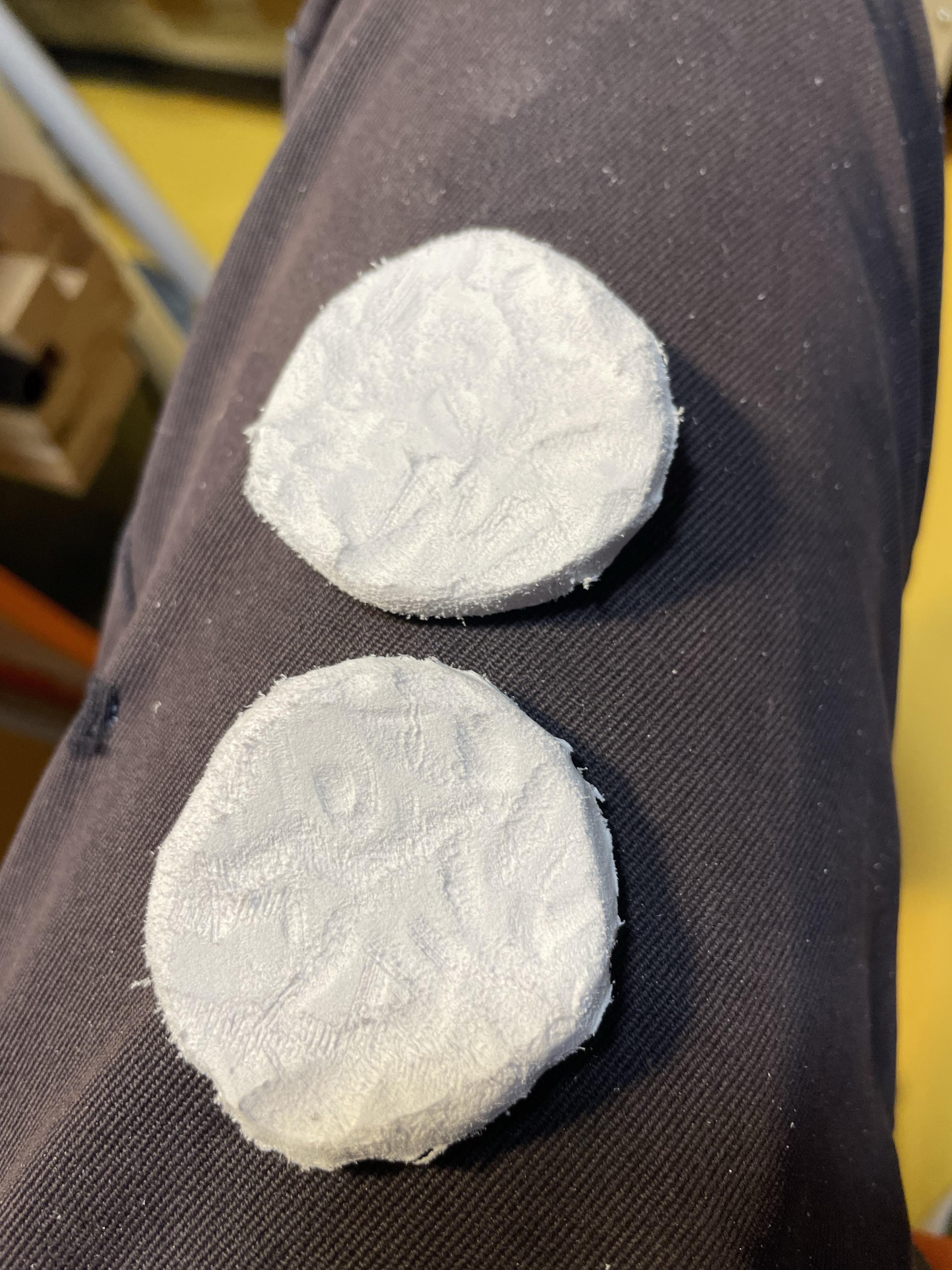
    We added a second layer of foam inside the head to make the connection area between the head and the handle larger. The last part of the hammer head were the faces for the hammer and the ends of the handle, the photo below is the top and bottom of the handle before heat-treating, priming and painting.

    You can see the hammer head taped up and curing in the photo below.

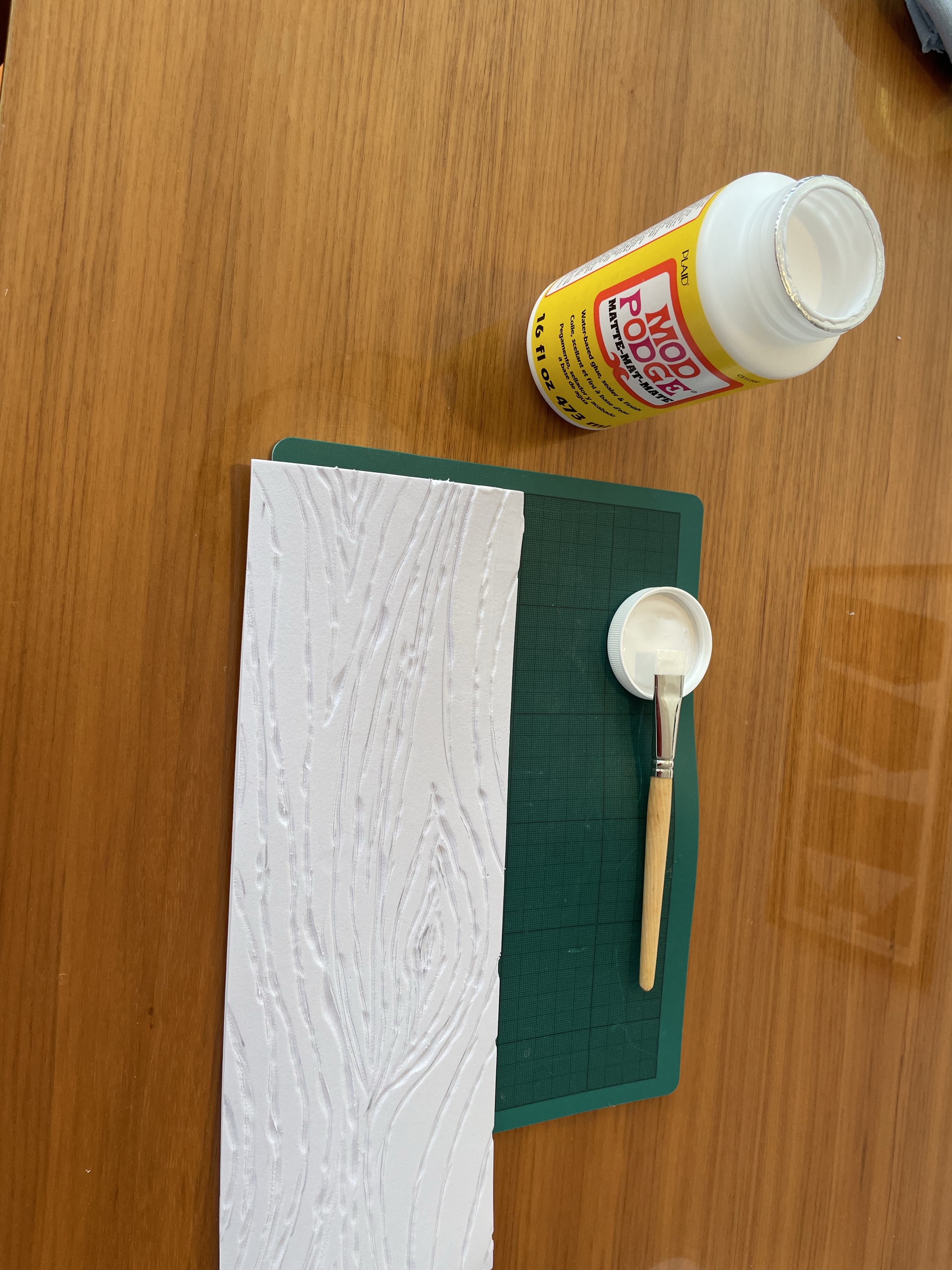
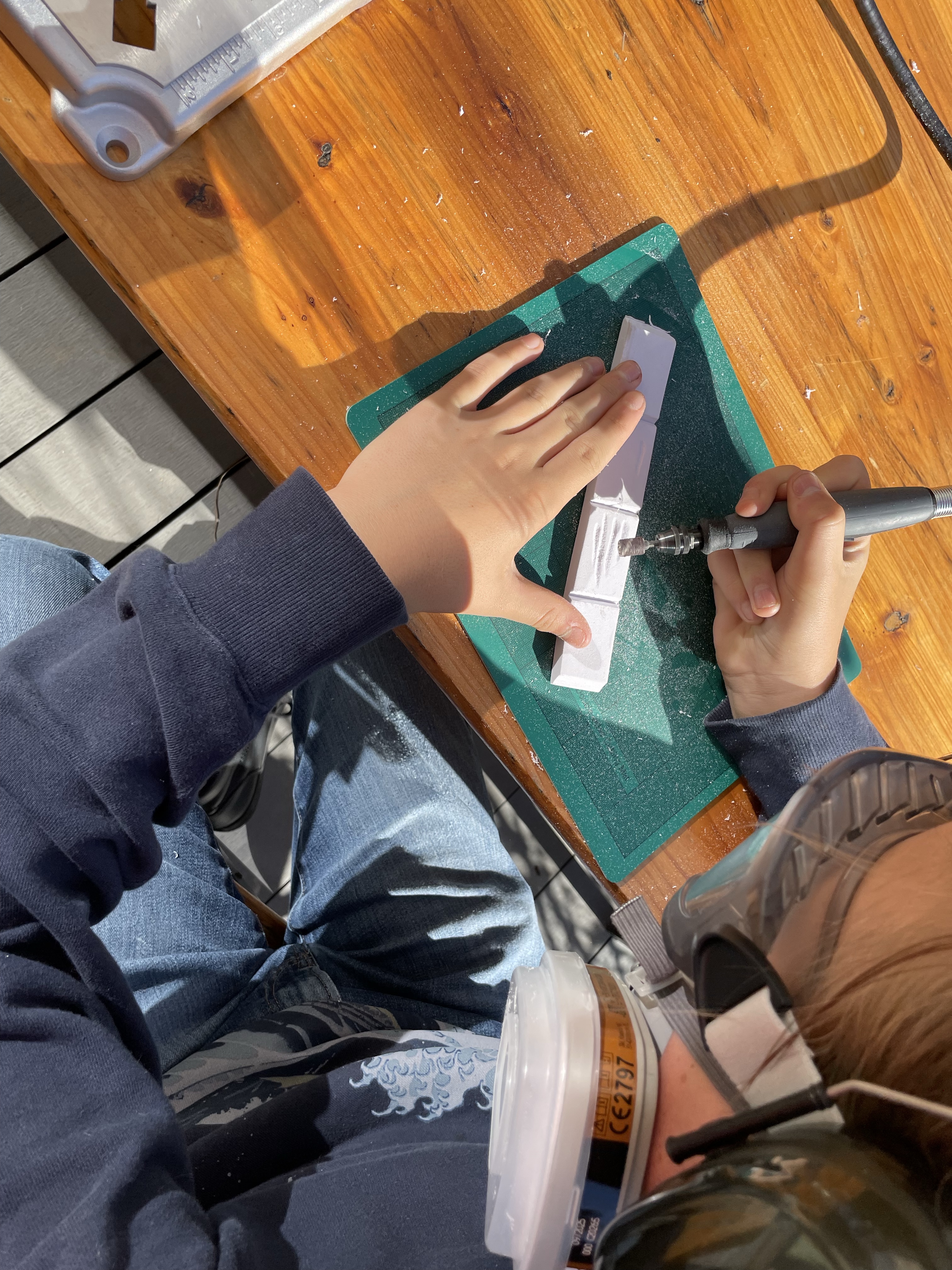
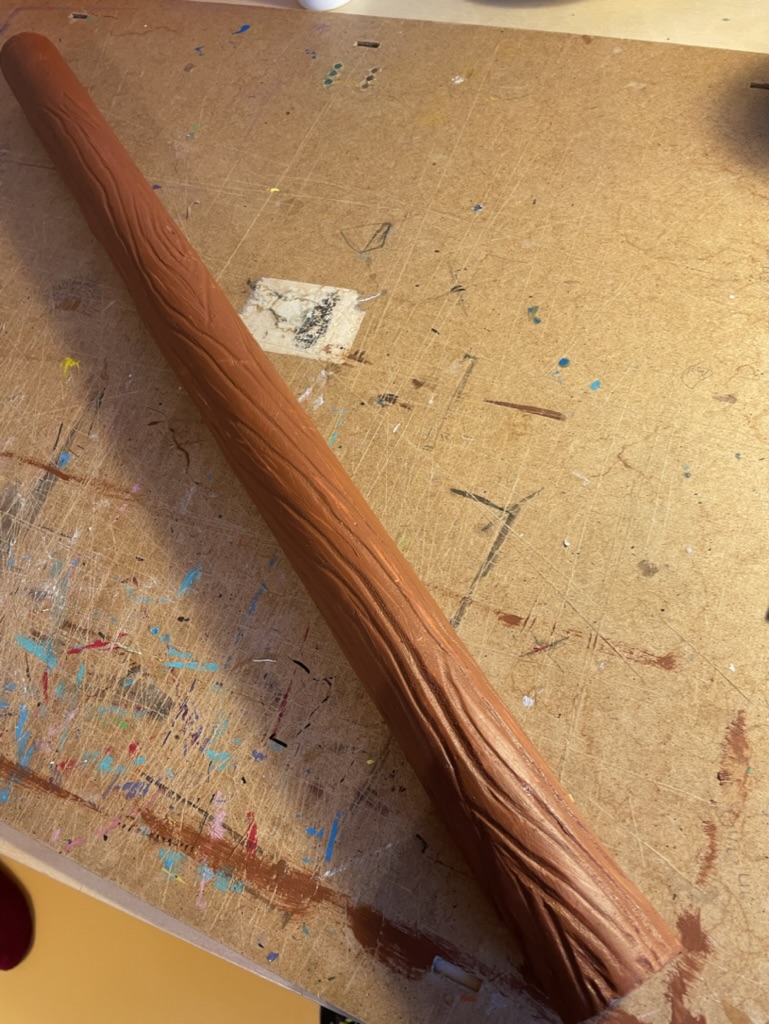
    The handle was a piece of plastic pipe which was wrapped in foam. Max did an excellent job of mapping wood grain onto the handle and then carving it with a dremel. The snake handle or Flexible Shaft Attachment is essential for carving EVA foam, it makes the work less tiring, as it is easier to hold. Some safety kit, as you can see in the photos is important too. A set of sealed eye goggles, some breathing kit with the dust and A2 vapour filters and some ear protectors will save your eyes, nose and lungs as well as your hearing from the dremel dust.

    Testing out how to make wood grain

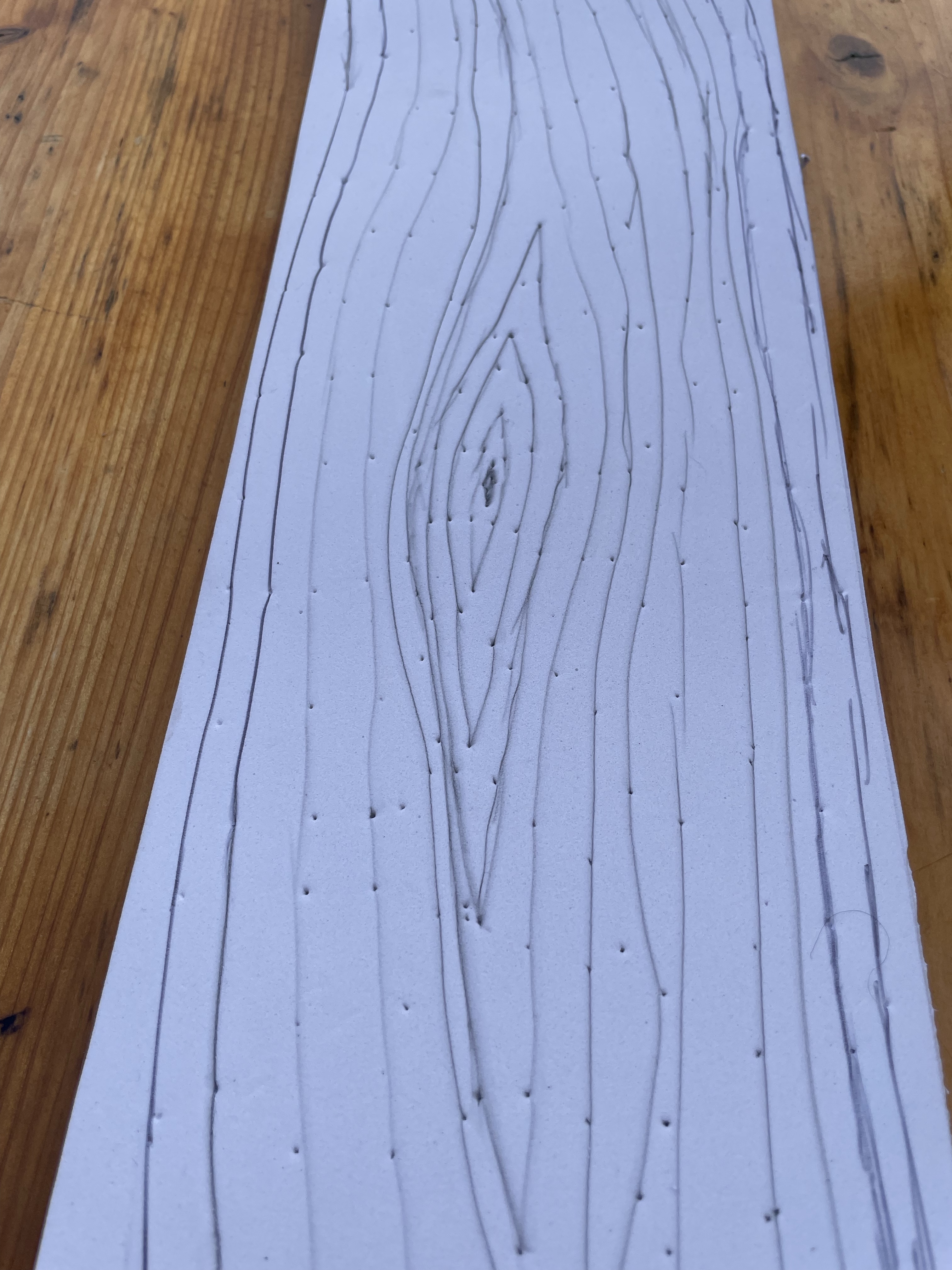
    Mapping across the tracing of the wood grain before carving. Max used pins to transfer the tracing from paper onto the foam, which was really effective.

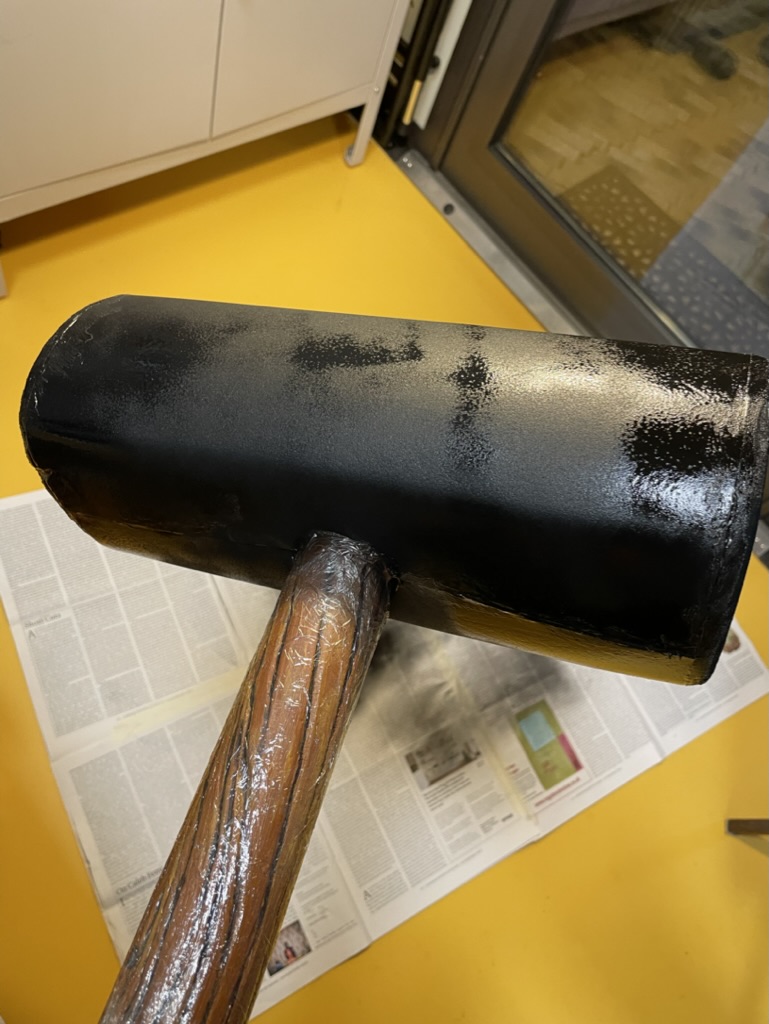
    It then got painted and we stuck the handle onto the head of the hammer and added bit of aging to make it look less like it was just made. It would have been good to have more time to do the aging, but the hammer had a final coat of varnish the night before comic-con at 1am!

    If this was helpful then you could buy-me-a-coffee.

  • a space for making things

    a space for making things

    I was watching Adam Savage’s youtube video about the changes he’s made to his workshop. His is 450 sq feet and he’s added 600 to that, so maybe the overall space is 60 foot by 15 foot. That’s a big room. Svetlana Quindt / Kamuicosplay also has some amazing studio workshop walkthroughs including her new one in Portugal. Another one that is nearly 1000 sq ft. It’s great to see these big workshops for making things in for people who do it fulltime.

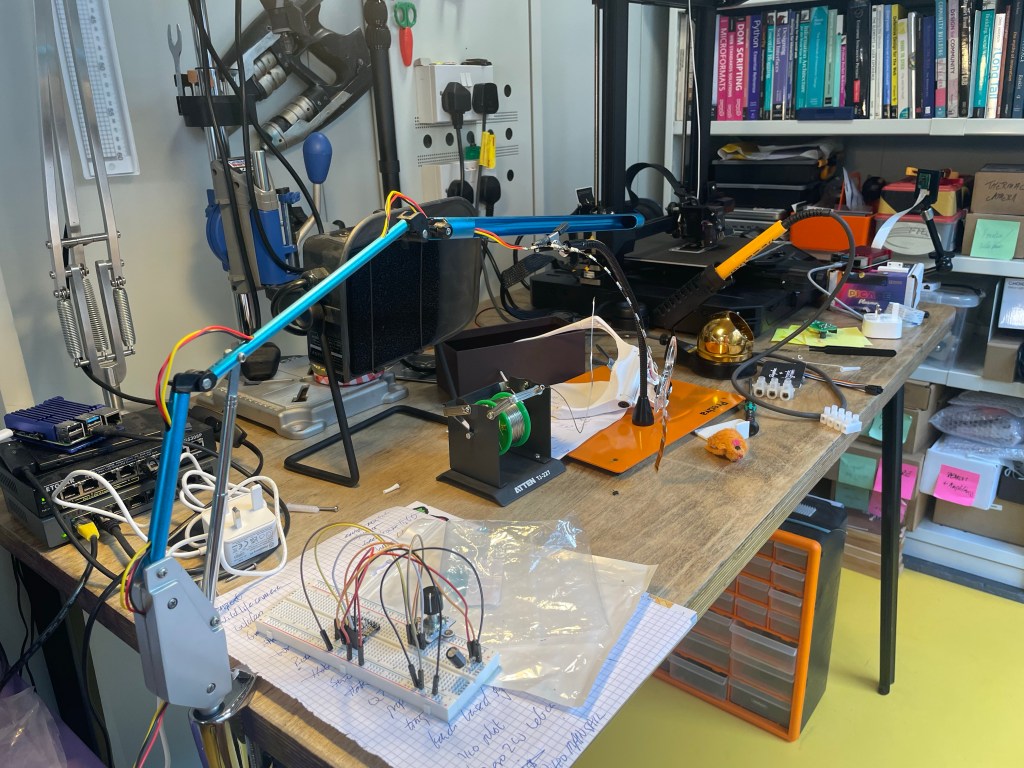
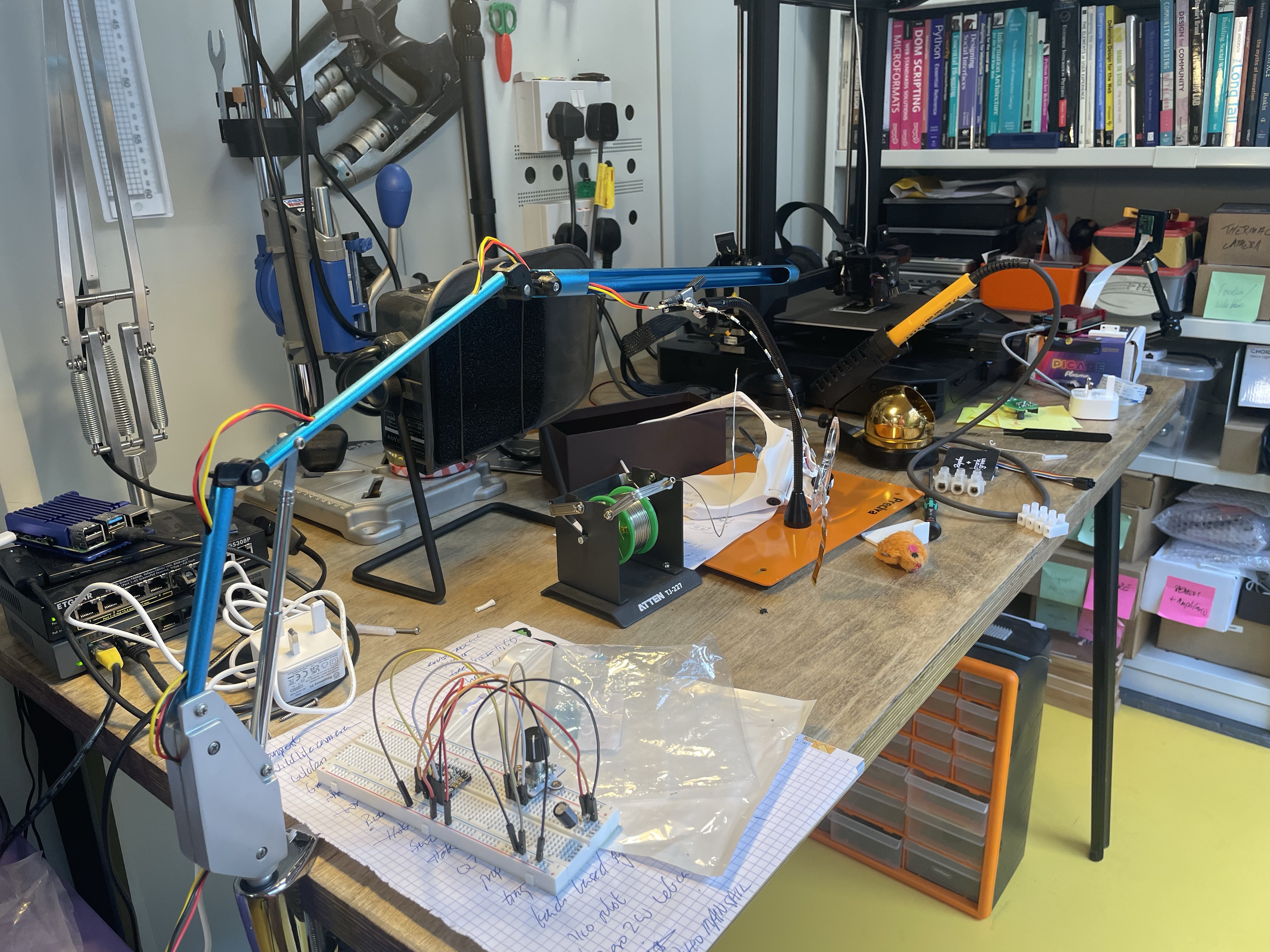
    Mine workshop/studio/office is a shed in the garden, so it is also the place I do a lot of my day job too. It is 2 metres by 4 metres, but it’s my first workspace I have that’s just mine.

    It’s changed again since I took that photo, the drill stand for the Dremel has moved to make way for a place to hook up raspberry pis with a monitor and keyboard.

    A lot of the same decisions apply even in my smaller space. Which are the critical tools, which get to be out on the flat surfaces all the time? Which can’t be put away easily (3d printers don’t fold). Which finished projects get to stay out on display?

    My workshop has changed a lot in the last year. A better table, which is more stable. Better arrangement for soldering and a realisation that I need a space to develop code which is on the making table, not on my work desk. The arrival of the 3d printer, which takes up quite a bit of the new table.

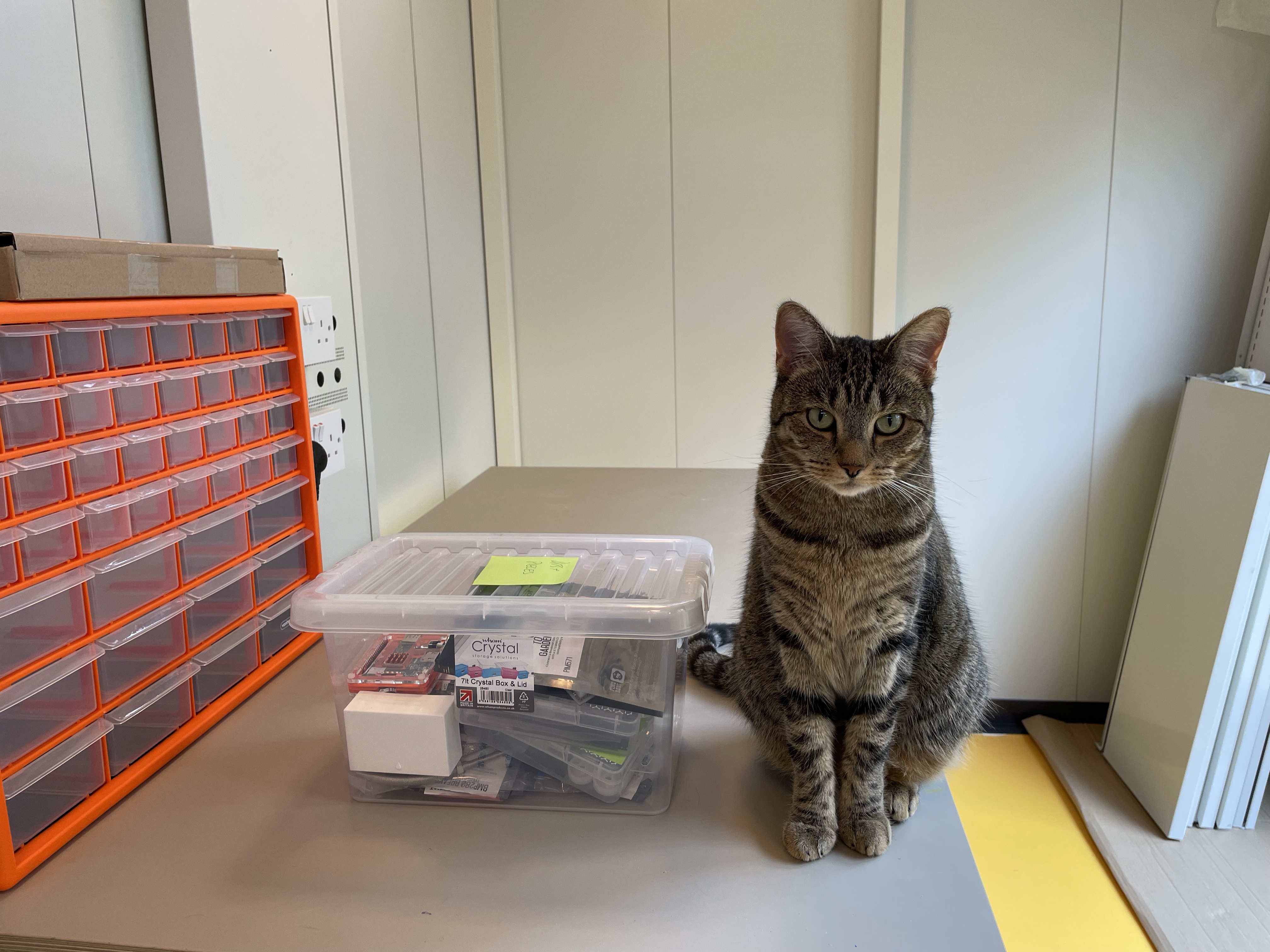
    It will change again, I know that. So take this post as part of a journal for my evolving workspace. Below is flooring laid and old table in place for making in August 21 with our cat Evie.

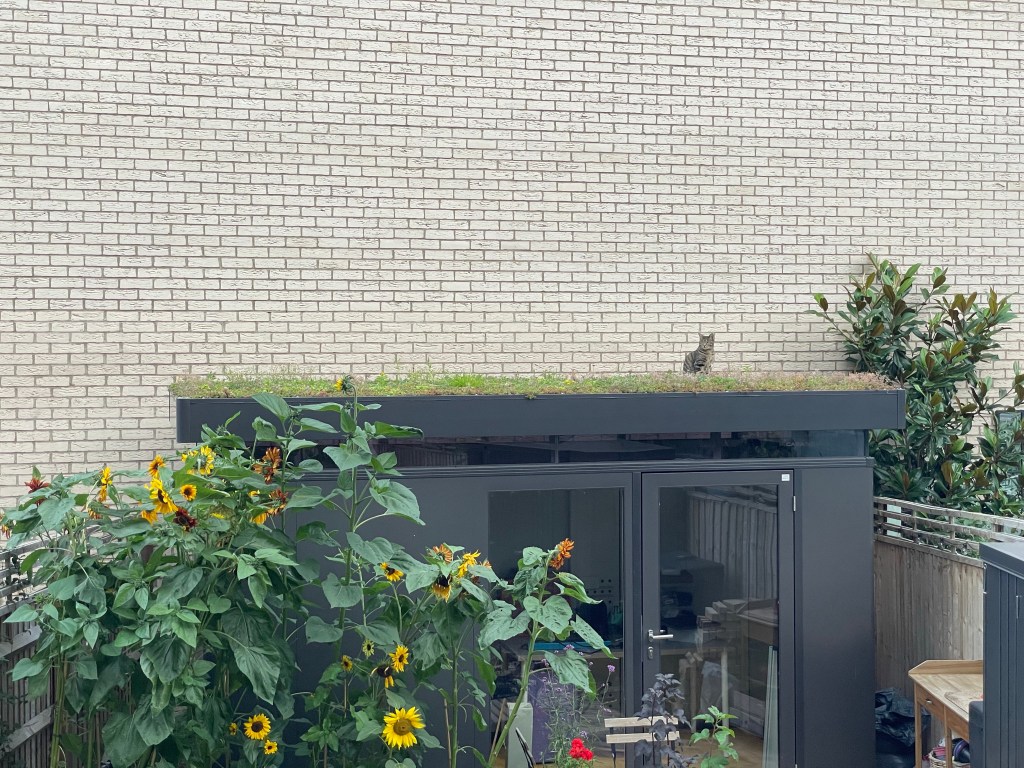
    Sunflowers in front of my shed in summer 21

  • Upcoming cosplays

    Upcoming cosplays

    I’ve a few ideas for new cosplays for MCM comic-con this May in London.

    I’m very taken with Buggy the clown pirate from One piece. That might be a mainly bought costume, as making that coat might be beyond my sewing skills.

    Buggy

    I’m also keen on Loki from the last few minutes of season 2, all forest feel and green lights, plus that crown. That’s more likely to be a full build.

    Loki from Season 2 ©️Disney / Marvel

    I’ve also looked at Fangorn /Treebeard, the Ent from Lord of the Rings. Huyang from Ashoka also appealed, I will do a full armour costume some time.

  • Being Peter Quill (first time)

    Being Peter Quill (first time)

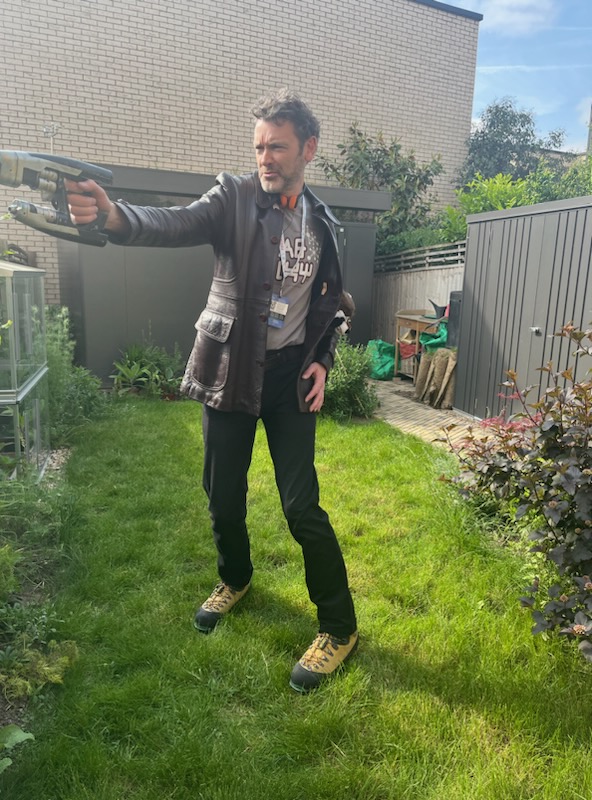
    picture of me as Peter Quill in my garden

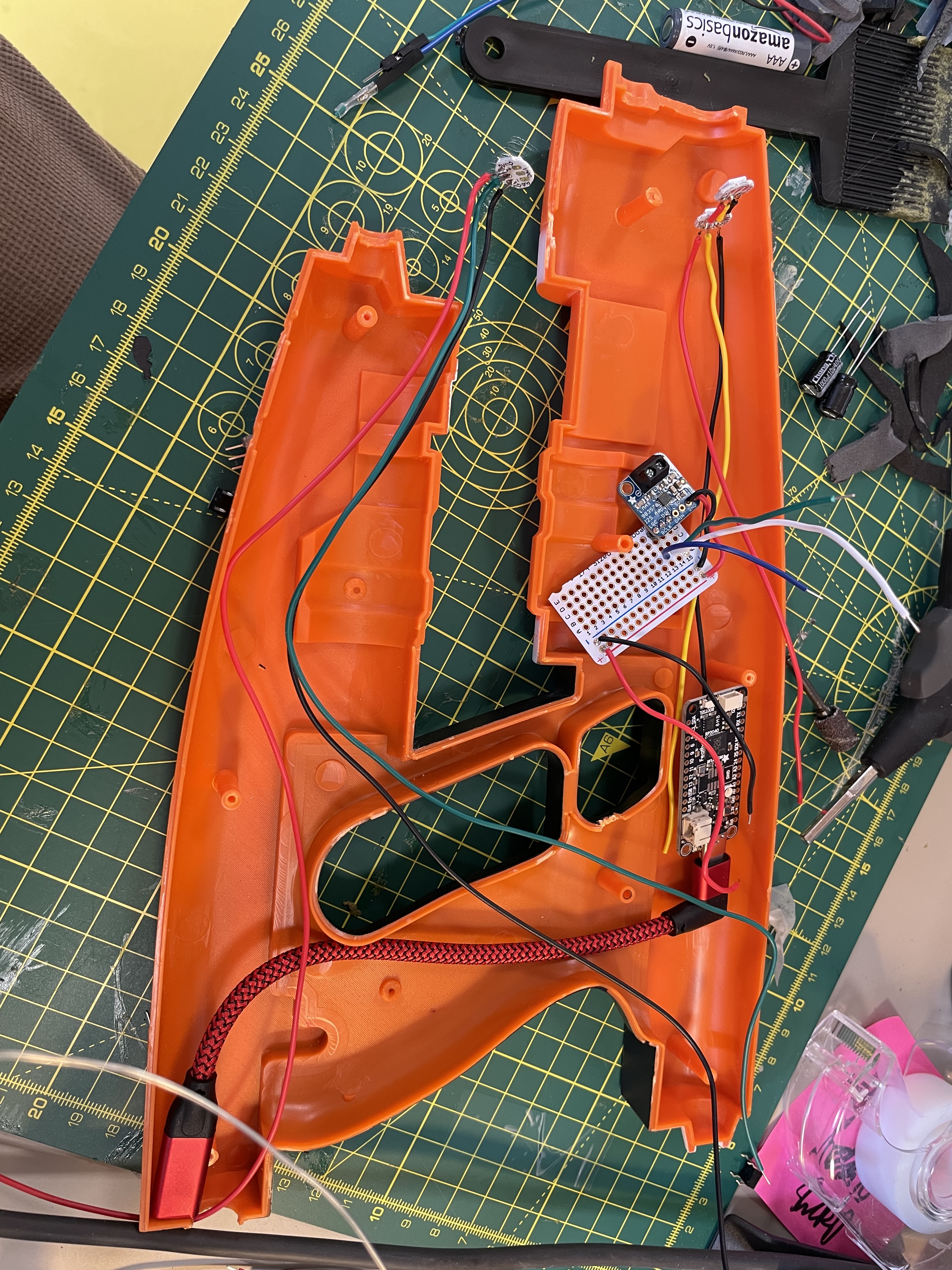
    Back in May, I did a version of Peter Quill, Star Lord from Guardians of the Galaxy. It was great fun to be him for the day. The main element of the costume I made was the elemental gun aka his blaster.

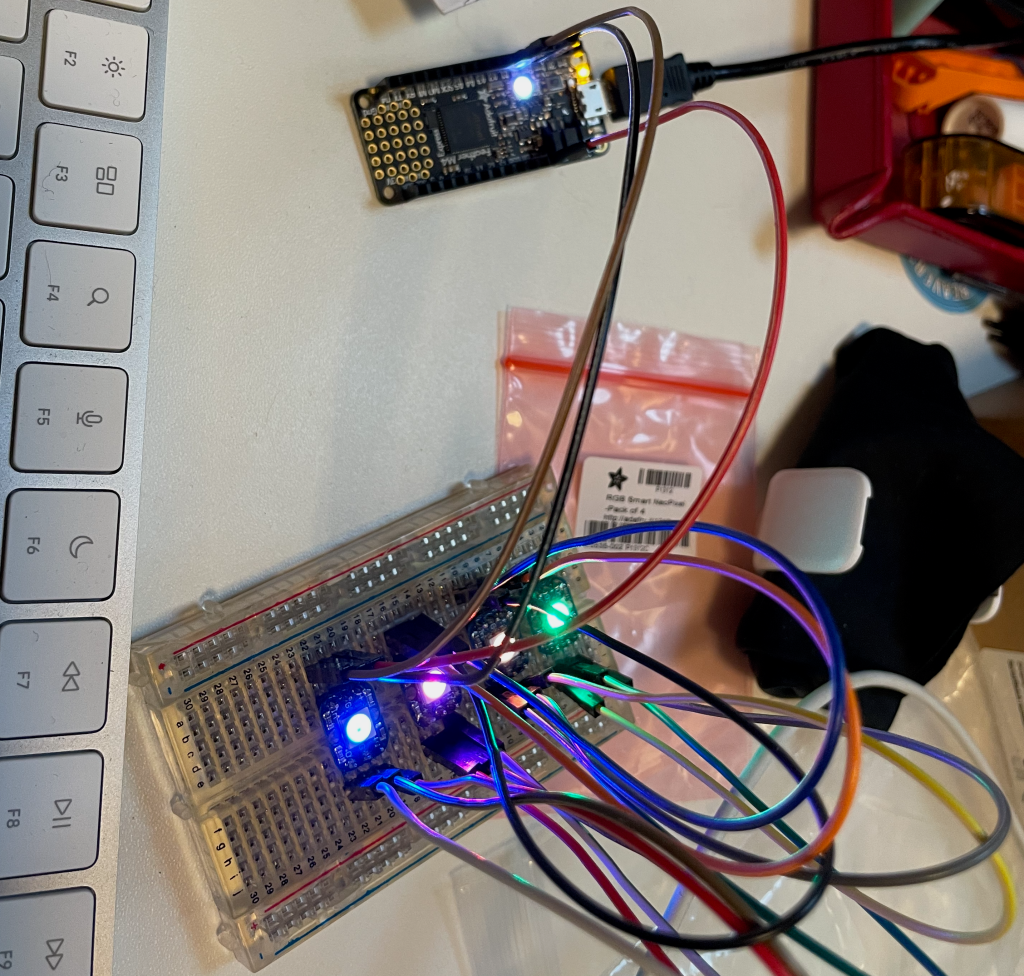
    This was a bought orange and white prop, which I split open to fit electronics inside and then ran out of time to complete, though I got close.

    Needed to shift focus to help Max finish the sword.