I mentioned a few weeks ago that I have ADHD. Since then I’ve been thinking about how to better communicate how I see the world to others, so that I can work or live or hang out with them.
Over the last year or so, I’ve got back into photography, partly to film content for the upcoming electronics props course content, Update on that and cosplay character for comic-con soon. Thinking about photography and ADHD together led me to seeing ADHD as offering me a different viewpoint, which I’ll expand on over the rest of this blog post.
Camera lenses and field of view
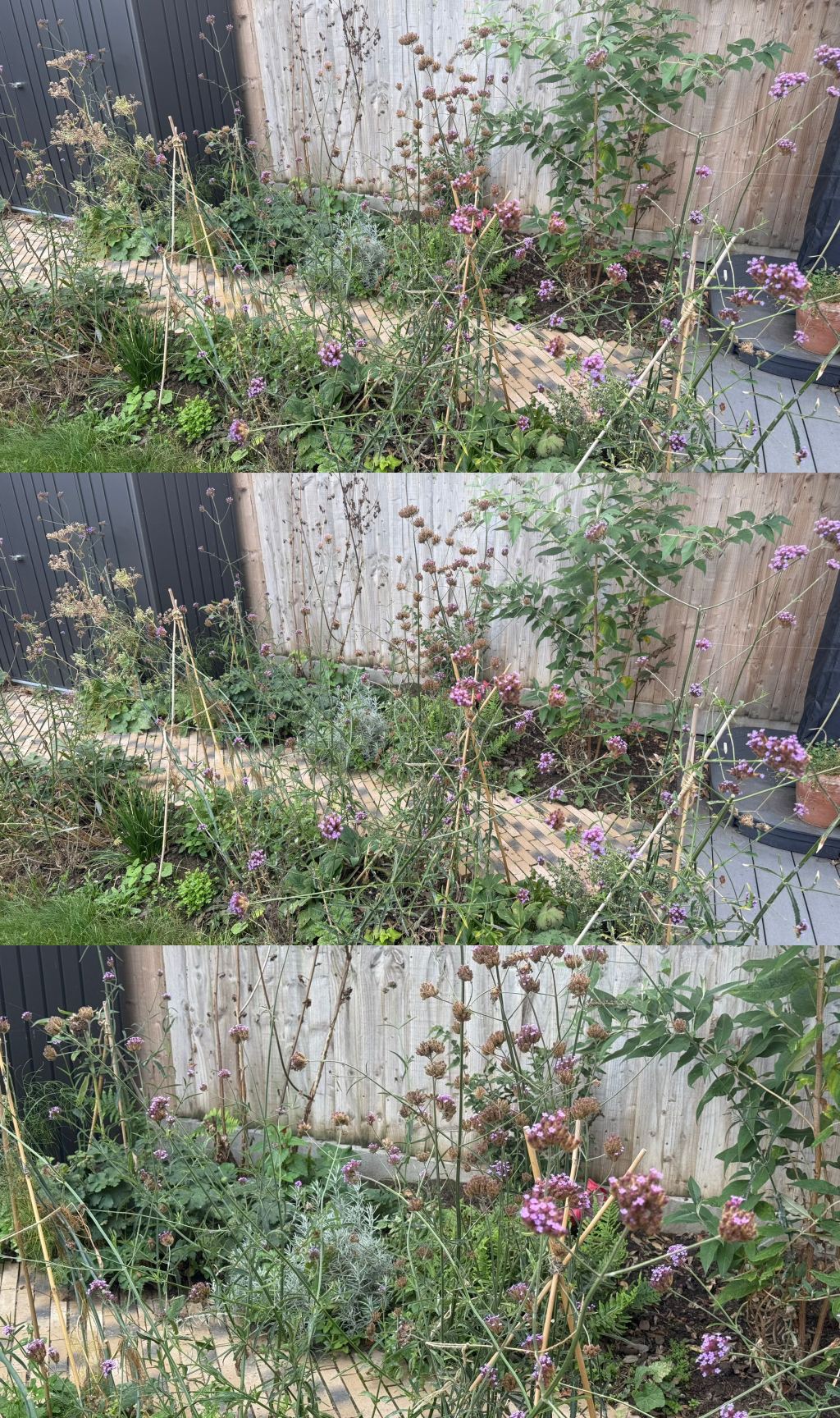
A quick recap on how the lens on an interchangeable lens SLR or mirror-less type camera operates, as I know many people use their phone to take photos, so this is less obvious. The focal length of a camera lens determines the angle of view and thus how much of a given scene the photographer will see in the viewfinder. A wide-angle lens like a 24 mm will show more of a scene than a 105 mm telephoto lens, which will pick out detail in the scene. The image below shows an wide angle view moving through a normal view to a telephoto of my garden in late summer. The composite image ranges from 24 mm to 48 mm and through to 120 mm, I’ve used my phone to take these pictures, so the same principles apply.
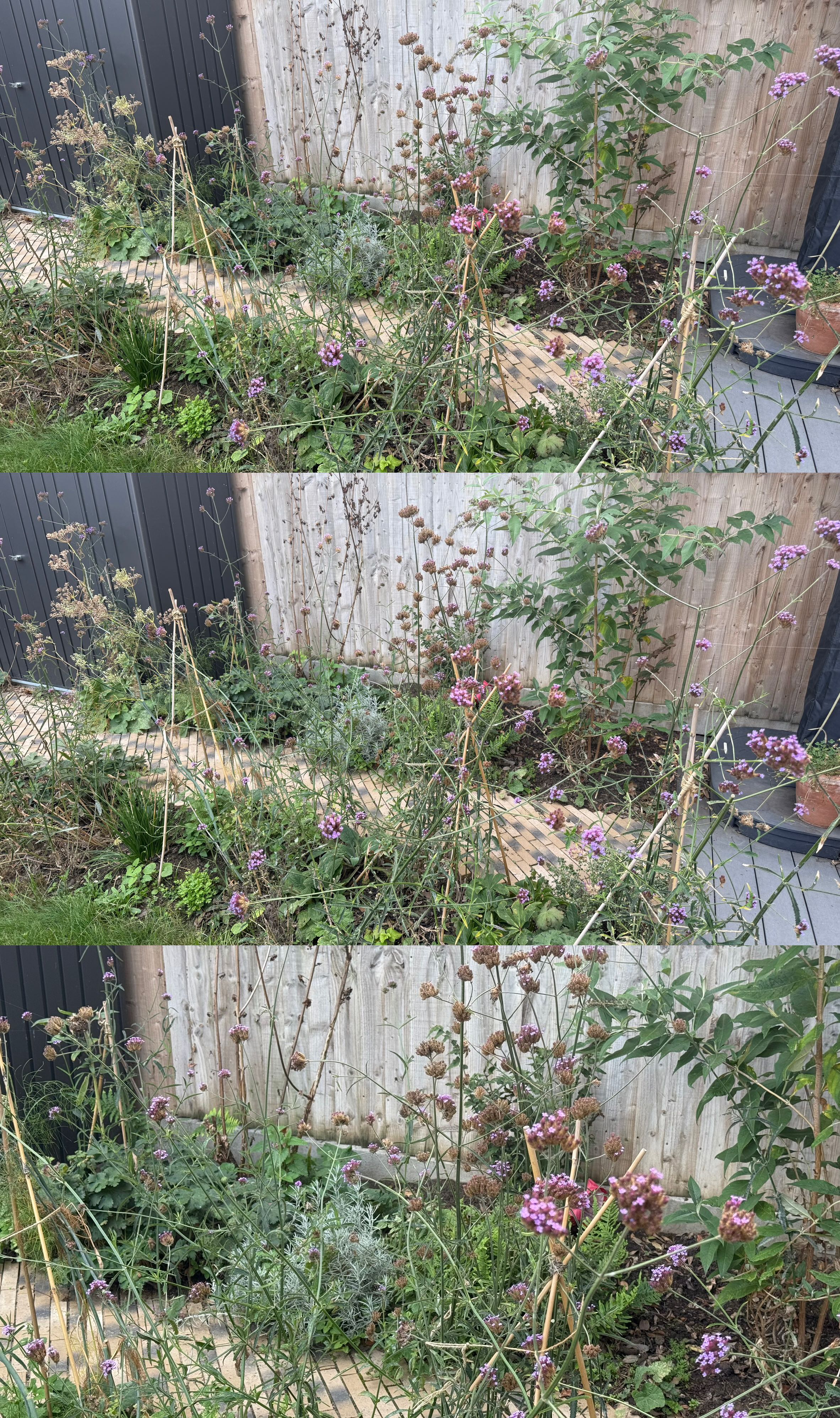
The image in the middle will feel most natural to look at, as human eyesight has a normal viewpoint of around 45-50 mm.
ADHD and attention
Using the idea of field of view helps show how attention and perspective are connected. People with ADHD don’t lack attention, despite what the name suggests. In reality, we focus on many things at once or dive into one thing. Directing that attention and managing focus is what people with ADHD typically find difficult.
So in a park where there are groups of people chatting; birds flying past; the hum of the ice cream van; the cyclists and runners passing by; plus the person I’m talking to beside me. I can sense all of that. Like you would see if you looked at a wide angle picture of the park.
The trinity of lenses
In this analogy everyone gets a zoom lens to enable their perspective in the world. In professional photography there is the idea of the trinity of lenses (link to Canon, as I shoot Canon). I’ve aimed to flatten out camera gear differences in this example so that all the lenses are at the same level of quality. Everyone gets a version of the Canon L glass f 2.8 professional level lenses.
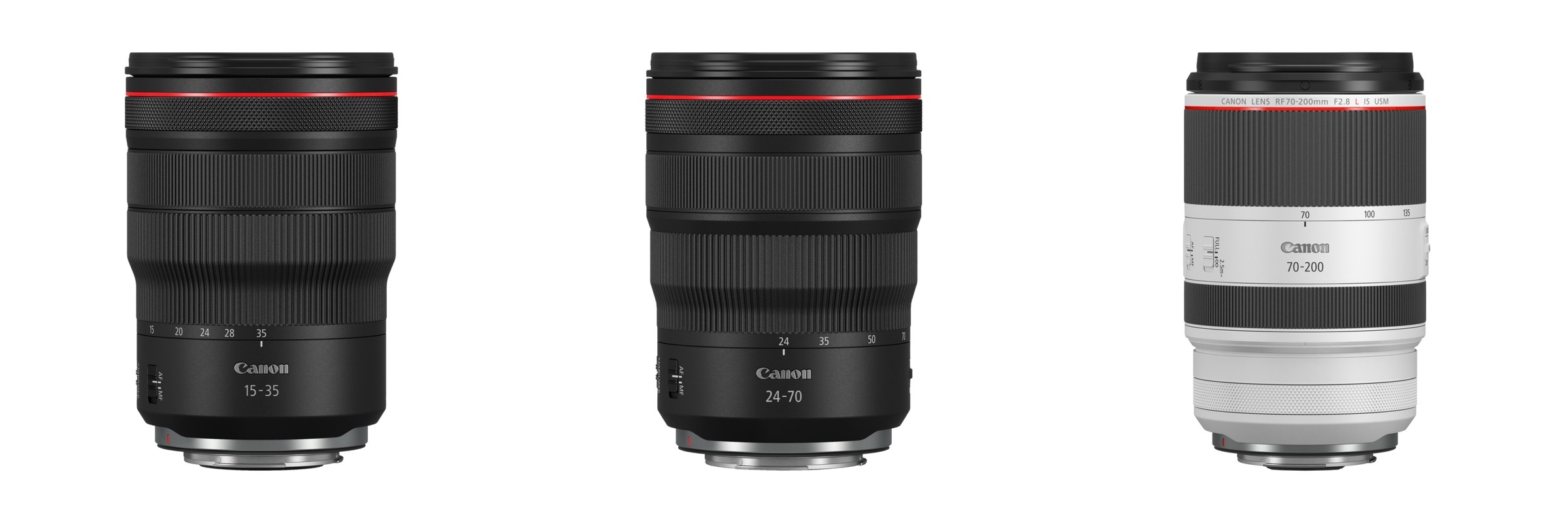
These are the pro-level ultra-wide zoom, the normal zoom and a telephoto zoom. The exact focal lengths are 15-35 mm; 24-70 mm; and 70-200 mm.
Which lenses do humans come with?
None of us, as human beings, have all three. Most people who are neurotypical have the middle one. The 24-70 mm is a fantastic lens, it’s the one most photographers aspire to first. It gives a wide angle view and a short telephoto view, plus the normal 50 mm view point in the middle. They can see the big picture from their wide angle view and dive into detail with the telephoto viewpoint. It is also just the one lens, so simple to move from overview to detail. For some neurotypical people they will think this is the only view of the world, which everyone will share.
I think people with ADHD have a different setup. They have the wide angle and telephoto pair from the above trinity. They are known for having a hyperfocus and the ability to dive right into the detail, the 70-200 mm covers that perfectly. ADHDers are also always attending to the world, as I noted above. So they see things in the environment which others can miss. This view of the world is reflected by the 15-35 mm ultra-wide zoom lens.
We can see both the wide view and the close detail from the first and last images in the set of three above, but we also have some different viewpoints.


What those of us with ADHD lack are two things, we don’t have the 50 mm normal view point. We also need to swap lenses to move from a wide view to a deep view or interpolate to get the 50 mm viewpoint.
How does this help with communication?
Neither of these lens setups are bad. In fact they have their separate strengths, which is good as no-one can go and simply buy another lens to change their how their attention operates.
This analogy helps me understand how I see the world. It reminds me that I need to be aware of the need to swap lenses. Also that colleagues and friends might be expecting me to come from that 50 mm viewpoint. I’ll need to interpolate, not just point out the big picture or the fine detail, at 15 mm or 200 mm.
I’m aware that there are individual differences between all people. Some people without ADHD might well have a 24-105 mm lens or be able to see bit wider, some might have a tighter zoom 28-80 mm. I’m using lenses as a metaphor to show what i think is a helpful way of understanding how someone with ADHD sees the world.
I’m writing a manual of me for work and thinking about how I communicate and how to explain that I can see both big picture and also be down in the details.
If you have ADHD, does this make sense as a way of describing the world? If you work with ADHD colleagues, does this help you understand why they might sometimes answer a question with a big picture response, yet later that day give you a down in the detail answer, when you are looking for the 50 mm view?
 gavin makes
You must be logged in to post a comment.